
Managing projects with spreadsheets often feels like wrestling with outdated tools. You might spend hours hunting for errors, re-checking formulas, and fixing broken links. According to one study, 88% of spreadsheets contain inaccuracies that can derail vital tasks and slow your entire team. Small typos or a misplaced formula can ripple across multiple departments, delaying financial data updates, job scheduling, and even customer relationship management activities. When you rely on inconsistent information, it becomes nearly impossible to maintain momentum or confidence in your project’s accuracy.
The growing complexity of modern project and service work calls for a system that keeps information accessible and eliminates tedious data juggling. However, spreadsheets struggle to keep pace with these demands. They offer no automated workflows or real-time insights, forcing teams to perform repetitive manual entries. One report found that 69% of smaller US companies still depend on spreadsheets for crucial processes, highlighting how widespread the problem remains. In a world where data must flow seamlessly from sales quotes to invoicing, relying solely on spreadsheets leads to frustrating bottlenecks and silos. It’s clear that organizations need a single, centralized approach to manage time, resources, and tasks more effectively.
The Hidden Costs of Managing Projects with Spreadsheets
Spreadsheets demand constant manual data entry, creating wasted hours and unnecessary repetitive tasks. When every detail relies on human input, your team is more susceptible to errors and delays that slow progress. On top of that, they offer little to no automation. Updates to customer relationship management data or job details often require multiple entries, forcing staff to duplicate their efforts across various spreadsheets and systems.
The bigger threat comes from the staggering error rates in spreadsheets, which can directly affect profitability and informed business decisions. A widely cited study shows that 88% of spreadsheets contain inaccuracies, whether it’s a small typo or an overlooked formula. These mistakes can lead to miscalculations in billing, misaligned resource allocations, and false impressions of project progress. In this environment, data becomes unreliable, and decisions made from that data compromise both short-term results and long-term growth.
Spreadsheets also hamper collaboration and version control. Teams often email different file versions back and forth, creating confusion about which one holds the most up-to-date findings. If your sales group is working from one sheet while accounting is using another, your entire business management solution suffers. According to multiple research sources, these compatibility issues slow workflows and risk duplication of data, ultimately undermining both team morale and your bottom line.
All of these issues make it clear you need a more unified approach that ties job details, time tracking, and financial data together. A modern, integrated platform allows everyone to work from the same source of truth, avoiding the pitfalls that spreadsheets can’t fix.
Why a Centralized System Like TimeLinx Is the Answer
TimeLinx eliminates the need for cumbersome manual processes by fully embedding its project and service management features into Sage CRM. Instead of juggling multiple spreadsheets or apps, you gain a single interface that covers jobs from inception to completion. This deep integration means your CRM software and financial data flow together seamlessly, so everyone sees real-time information without extra data entry or re-checking numbers.
Because TimeLinx synchronizes data across departments, your teams stay aligned, and business decisions are based on accurate, up-to-date figures. There’s no repetition of entries into disconnected systems, which lowers the likelihood of typing errors or overlooked expenses. Improved collaboration is another clear benefit—everyone can view customer histories, monitor project status, and share updates immediately. When you reduce silos, your entire organization can respond to customers faster and maintain a smoother workflow.
TimeLinx also sets itself apart with unique features like the Revenue Optimization Engine and SmartMobile access. The Revenue Optimization Engine delivers instantaneous profitability insights about every hour logged and expense accrued. If any project dips below expected margins, you can address problems right away instead of after the fact. Meanwhile, SmartMobile access keeps remote teams plugged in, letting them handle tasks on the move and eliminate the lag that comes with offline updates.
Ultimately, these capabilities offer businesses the practical benefits spreadsheet-based approaches can’t match. From better resource management to detailed cost tracking, TimeLinx gives you a complete view of your operations and helps prevent the inaccuracies that dampen profits.
Key Features of TimeLinx that Transform Project Management
Revenue Optimization Engine
TimeLinx’s Revenue Optimization Engine delivers immediate insights into project profitability, ensuring you know exactly where each dollar goes and when. By calculating margins in real time, the system alerts you to projects that might be slipping below desired profit levels. Instead of discovering lost revenue at month’s end, you can make mid-project adjustments that keep your financials on track. This approach significantly reduces the risk of underbilling and missed billables, a common problem when dealing with spreadsheets and their inevitable data errors.
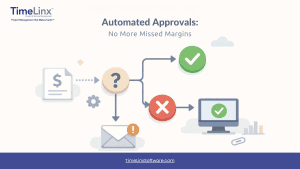
Beyond insight, the Revenue Optimization Engine also provides pre-calculated workflows that streamline the entire project lifecycle. From budgeting and time tracking to expense approvals, every step is automated and interconnected. Businesses no longer waste hours cross-verifying figures between CRM customer data and separate accounting tabs. Everything you need is in one place, cutting down on duplicated efforts and giving you true control over project timelines and costs.
SmartMobile Access
SmartMobile takes your workflow beyond the office walls, allowing field teams to connect to vital project information in real time. Instead of waiting to return to a desktop to input hours, a construction manager or field consultant can instantly log updates, expenses, and job status from anywhere. This quick reaction capability keeps the rest of the team informed, ensuring that any project changes are shared and recorded without delay.
That mobility translates into flexible, high-productivity work conditions for remote teams. Personnel are free to make decisions on the go and update records on the spot. There’s no need to juggle multiple apps or re-enter data into spreadsheets at the end of the day. By cutting out repetitive tasks, team members can focus on delivering quality service and meeting client demands.
Gantt Charts and Resource Allocation
TimeLinx includes Gantt charts that offer a clear visual snapshot of your project’s timelines and dependencies. You can see how each phase links to the next, where potential overlaps might occur, and whether tasks are on track to meet deadlines. This visual clarity is critical for teams that need a structured way to stay aligned, particularly if their projects balance objectives from multiple departments or customers.
Resource allocation tools tied directly into these charts help you optimize workforce management. Rather than randomly scattering your employees across tasks, you can assign them where they’ll be most effective while avoiding scheduling conflicts. Even factors like overtime or specialized skill sets become easier to track. As soon as a person logs hours or updates a task, it’s instantly reflected in the chart, giving everyone a reliable roadmap for the days or weeks ahead.
The Business Benefits of Replacing Spreadsheets with TimeLinx
Switching from spreadsheets to TimeLinx instantly boosts data accuracy. Instead of entering the same information multiple times in disconnected sheets, your team updates tasks just once, and that single entry cascades through every part of the system. This simple process helps you avoid duplication and ensures that every sales or expense entry remains consistent, whether you’re managing a marketing customer service issue or finalizing an invoice in Sage CRM. By collecting this data in one place, decision-makers can trust that real-time numbers are correct, letting them focus on making strategic business decisions rather than chasing errors.
Collaboration also improves, as TimeLinx replaces the chaos of forwarding files and worrying about version control. Teams working with field service data, resource scheduling, or CRM customer relationships can see the same dashboard, so they’re always on the same page. Real-time analytics further amplify these benefits, highlighting performance trends and potential problem areas before they derail a project. When your accounting team, project managers, and executives share a unified view, identifying profit leaks or scheduling conflicts becomes far easier—and rectifying them becomes much quicker.
TimeLinx’s impact on financial performance is just as compelling. Spreadsheet errors cut into profit margins, yet research repeatedly confirms that manual processes are incredibly risky, with even minor typos causing major budget disruptions. By harnessing automated workflows and accurate data, you reduce these costly mistakes and optimize profitability. Since the Revenue Optimization Engine continuously calculates each engagement’s performance, you’re no longer blindsided by hidden expenses or untracked labor. That complete overview positions you to seize profitable opportunities while swiftly fixing unproductive tasks.
These improvements highlight the major shift TimeLinx brings to businesses burdened by spreadsheets. Organizations see firsthand how removing manual data entry, silos, and inaccuracies results in better efficiency and greater confidence in every decision they make.
Streamline Your Processes with TimeLinx Today
TimeLinx tackles the many pain points that spreadsheets can’t fix. By leveraging an embedded approach in Sage CRM, it eliminates manual tasks, unifies departmental information, and provides precise, real-time metrics for decision-makers. Instead of patching spreadsheet errors or tracking down missing data, your teams can focus on delivering higher-quality projects and building stronger customer relationships.
Contact TimeLinx for a requirements review to see how it can streamline your project and service management processes.