
Updated on April, 2026
You might be a CFO or in a leadership position at a small or medium-sized enterprise (SME). In today’s environment, focusing on cloud financial management has become increasingly important as you look for new ways to monitor cloud usage and keep your cloud costs in check. By refining cost allocation and cost optimization strategies, you can maintain financial accountability while taking advantage of emerging technologies.
If so, you may have attempted to manage the impact of the pandemic by adjusting your technology strategy. Many businesses have streamlined their approach to cloud services and cloud investments, looking for strategies that support real-time cost analysis. This can help you and your finance teams understand and optimize cloud spending, ensuring you don’t lose sight of factors such as cost savings and pricing models.
In this article, we look at considerations that businesses have around tech investment, the power of the cloud, and how both can help your company with financial management. Whether you’re using AWS Cloud or another public cloud provider, adopting a comprehensive financial management (CFM) framework can lead to better cost efficiency and better use of your budget for core business needs.
Holding back on tech spend vs reinvesting in IT.
According to IDC’s 2021 Cloud Pulse Survey, some businesses tried to hold back on spending.
In fact, 18% of SMEs worldwide aimed to save money by turning off selected IT services, 16% negotiated pricing with vendors, and 15% halted new IT projects completely.
All completely understandable actions.
But perhaps surprisingly, almost a quarter (23%) of global SMEs reinvested in IT.
As offices and stores closed during various lockdowns, you may have rapidly invested in cloud technology to support remote working and gain supply chain efficiencies to combat sourcing issues—something your finance team would have a big eye on.
More than half (60%) of SMEs say they planned to increase their IT budgets during 2022, with 32% significantly increasing their cloud budget, and only 5% planning to decrease it.
If you’re in charge of your business’s finance team and not spending money on cloud technology, you should be. Embracing cloud financial management tools will allow you to measure and optimize cloud usage more effectively, while also identifying emerging cost drivers. This proactive approach leads to cost management that supports smarter decision-making and better transparency across departments.
Typically, cloud software can be more secure than desktop legacy solutions, as cloud providers should guarantee the safety and security of their platforms.
You benefit from additional safety measures, such as password protection, encryption, and access limitations based on user profiles.
You should also expect from cloud providers 24/7 monitoring and dedicated cybersecurity teams that can rapidly identify and respond to potential threats. Maintaining a close eye on AWS cost, for instance, can help you detect anomaly detection issues sooner and deploy cost explorer tools to adjust spending accordingly.
Legacy software and the problems with manual processes
It’s perhaps easy for businesses to hold back on investment in financial management business software—it involves work to find the right cloud vendor, and budgets might dictate nobody is keen on spending money.
You wouldn’t blame a business for having an ‘if it isn’t broken, why fix it?’ attitude. Legacy software can still perform basic functions that finance teams require to maintain day-to-day operations, so it’s natural to stay with existing systems.
However, outdated accounting software can lead to a multitude of problems, such as the following:
Inaccurate data
With desktop legacy financial management software, you lack real-time, up-to-date information for accurate reporting. If you’re still working with spreadsheets, you may have to manually key in data—and it’s easy to make mistakes. In a dynamic cloud environment, on-premises solutions often lag, making it challenging to maintain cost usage accuracy and precise cost allocation measures.
Inefficient processes
As well as risking errors, manual processes such as retyping and rekeying data from spreadsheet to spreadsheet take up a lot of time.
That’s time better spent on more critical business activities, such as strategy and planning. By freeing up resources, businesses can redirect their engineering teams to higher-level tasks focused on financial management cloud solutions, cloud cost optimization, and further innovation.
Lost data
As your business grows, you’ll build up a mass of documents and data, which will be highly challenging to keep organized if you’re still reliant on paper and on-premises storage.
As you grow, you may also be subject to increased regulation, which demands accurate recordkeeping. If you end up becoming a public company, that may present new challenges. Embracing a cloud finops approach can help you stay on top of compliance, cloud costs, and usage patterns.
Poor visibility
If you can’t actively see what’s going on in your company’s finances, it opens you to a world of pain when looking for mistakes or ways to stop them before they become an issue.
It’s also more complicated than necessary to identify trends and patterns and make accurate financial projections. By adopting tools cloud financial teams can rely on, such as AWS Cost Explorer and advanced cost management dashboards, you can obtain a clearer picture of your cloud spending in real time.
Why moving to the cloud will help the finance team
The more you use cloud technology, the more you’ll expand areas where the technology can bring value. Cloud financial management is about not just switching systems, but about transforming how you monitor spending and strategize for the future.
You can measure the financial impact of decision-making, identifying and validating your most valuable revenue streams.
You may have to steer the ship when it comes to getting value out of data, working with IT in moving your business to the cloud, and implementing technologies such as automation, analytics, and artificial intelligence.
However, the cloud allows you to set up a foundational framework for your finance team to manage, measure and monetize data as an asset. You’ll gain deeper insights into cloud cost management, whether using multi cloud deployments or focusing on a single cloud service provider.
Through working with cloud data, your finance team can build insights into new revenue streams, and support tech and finance to work together in improving efficiencies.
Could automation be crucial to the future of your finance team?
Automation stops people from spending large chunks of time on repetitive and low-value tasks, costing your business thousands of pounds each year—funds you could use for reinvestment.
As we already noted, the time you spend on manual processing is time your business can’t spend on more valuable tasks, such as winning new business.
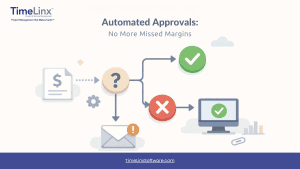
Cloud finance software can automate those dull and pesky accounting tasks, crunch those numbers, produce reports, and provide valuable analytics. Automation also supports cost management by flagging cloud usage anomalies, so you can quickly pivot and reduce cloud spending in areas that need adjustment.
It’s not just about getting rid of old technology—it’s about taking advantage of the strategic value and edge in the marketplace that cloud technology can give you. When you use tools that support AWS cloud financial management and real time cost monitoring, you equip your organization to act quickly and make evidence-based decisions.
5 steps to move to the cloud
Here are a few pointers if you want to move your business to the cloud.
1. Develop a business case
With the cloud, your finance team can become more agile and faster, gaining efficiencies through the time you save by removing time-intensive manual tasks. Creating a strong business case also involves outlining how cost optimization, cost savings, and usage patterns will shape your overall financial management cfm approach.
2. Support IT in setting up the systems
To extract value from the cloud, it’ll be up to you to assess commercial models, look at the risks, recognize and account for value, and apply controls and governance. This is where tools cloud financial experts rely on can assist with cost efficiency and cost usage monitoring, ensuring your cloud operations stay on track.
3. Plan and get strategic
Examine your financial management business goals and what will drive your use of the cloud.
Do you want to modernize your operations and adopt digital transformation?
This is the perfect time to consider not just technology, but also cost allocation methods and how to optimize cloud investments in alignment with your organization’s goals.
4. Examine what cloud technologies will work for you
Create a clear roadmap for implementation. You will have to work closely with your people, who will drive the use of new technology.
With the tech in place, you’ll need to work at measuring your progress and ask a few questions of your finance team:
- How are you using the cloud tech, and are you doing it right?
- How effective are your new processes?
- Are they leading to the productivity and efficiency improvements you expect?
- What outcomes do you see with the new technology?
- How can you get business metrics for your intended goals?
Placing a strong focus on cloud cost optimization, cost efficiency, and management tools will help you fine-tune your approach and maximize the ROI from these investments.
5. Communicate the changes with your team
Keeping your finance team (and the wider business) up to date with the move to cloud software is important. After all, they’ll be using the new technology, so they have to be clear on what’s happening.
And get them involved in the new ways of working—they’ll be able to support and offer valuable day-to-day insights that will result in the move being a smooth one. Bringing multidisciplinary teams together under a cloud finops strategy can heighten financial accountability and help everyone understand the importance of cost management.
Final thoughts: Advocate for the cloud and digital transformation
You and your finance team could have a critical role in the digitalization of the business. By spearheading cloud financial management initiatives, you ensure cost usage remains transparent while also encouraging collaboration across teams.
You may have a central part to play in a future where you tie success with your ability to extract value from the immense amount of data available to your business.
By developing your cloud data capabilities, you can make the right decisions about what to invest in. You’ll also position your company favorably when navigating pricing models or adopting multi cloud strategies.
Make that connection between cloud tech and business value.
Advocate for digital transformation and elevate the role of your finance team.
Prove the value of the cloud and win your battles by making your business more agile, forward thinking and data driven. This approach not only enhances day-to-day cloud operations but also enables your company to adapt to evolving cloud environments. When done right, cost management becomes simpler, and you can align your financial strategies with modern technologies, driving sustainable growth.