By Mark Engelberg, TimeLinx –
Few people these days are Googling “what is a Customer Relationship Management solution?”—known simply as a CRM. If you’re reading this in your office, chances are you’re just a few clicks away from your own CRM. Yet, a relationship management CRM approach goes far beyond contact or sales management. It is fundamental for managing customer interactions, tracking customer data and ensuring streamlined customer support across all departments. Many companies also integrate their CRM with social media channels to foster brand loyalty and gather valuable analytics about customer preferences.
When it comes to the question “what is a project and service management solution,” or PSM, far fewer people know the answer—which is unfortunate, given the PSM’s critical role in cost optimization and profitability. A specialized project service management platform is a vital tool that merges project management with resource allocation and real-time analytics, enabling businesses to track the entire lifecycle from project inception to service completion. This unified approach enhances customer satisfaction and operational outcomes.
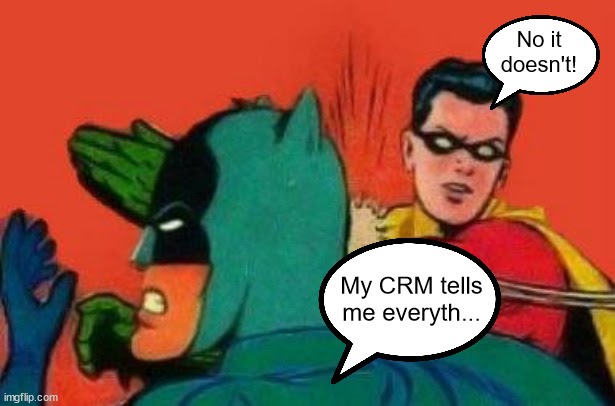
PSM solutions are to CRMs what Robin is to Batman—without them, CRMs can’t perform at their best. Together, they solve more challenges and mitigate greater risks. By integrating CRM with a project management solution, organizations create powerful synergy, transforming routine tasks into end-to-end workflows that cover sales, marketing, customer relationship management and project service delivery. This integration ensures swift turnaround times, seamless collaboration and optimized profitability.
Before diving deeper, let’s pause to ask: why are standalone CRMs so prevalent? Many organizations implement a CRM platform without realizing the potential benefits that CRM, ERP and PSM integration can provide.
The Unstoppable Rise of CRM Solutions
‘CRM’ is an acronym so ingrained in business language today that it’s easy to forget it refers not to the platform itself, but to the process CRM solutions are designed to manage. As a relationship management CRM system, it gathers customer interactions, organizes contact details and supports a range of automated tasks, from sales campaigns to support ticketing. The focus is on building sustainable customer relationships that drive growth.
Consider the Wikipedia definition:
“Customer relationship management (CRM) is a process in which a business or other organization administers its interactions with customers, typically using data analysis to study large amounts of information.”
This definition shows that CRM software is central to capturing and analyzing customer data across multiple channels—including social media and direct communications—to improve how organizations manage everything from lead generation to client retention.
While this may not be surprising, it is important to understand the distinction between a CRM process and a CRM solution to see where PSM fits into the bigger picture. Recognizing this difference is key to choosing CRM solutions that align with broader organizational goals, including project management, service delivery and billing, rather than limiting CRM use to the front end of the sales and marketing funnel.
Why Are CRM Solutions So Common?
From a high-level view, CRM solutions have become nearly ubiquitous. Whether you use a leading Salesforce CRM platform or a smaller, user-friendly solution, CRM tools are now standard for businesses wanting to streamline customer interactions across every touchpoint.
According to Grand View Research:
“Industry estimates suggest that around 91% of organizations with more than ten employees in their workforce use CRM systems.”
This widespread adoption also highlights the growing interest in project management solution integrations. Companies that use both CRM software and project service management often enjoy improved operational efficiency and better data analytics for decision-making.
Key factors driving CRM adoption include:
- Rising demand for automated marketing engagement
- The need to optimize digital operations
- Imperatives to improve customer experience
- Imperatives to improve service quality
- Aligning project management outcomes with CRM project data to create holistic insights that bridge pre-sale and post-sale processes
Collectively, these factors reflect the understanding that commercial value comes not only from selling products and services, but also from managing and leveraging relationships over time. By incorporating CRM, ERP and PSM strategies under one umbrella, businesses gain a unified view of customer interactions, resource allocation and project service delivery. This integration of relationship management data and project management intelligence reveals new opportunities to streamline costs and boost profitability.
Extracting Business Value from the CRM Process
To extract value from your CRM tools, you need clarity about what the system tracks and how it manages customer data across the entire client journey—from initial social media outreach to contract signing and beyond.
Where CRMs Fall Short
Your marketing team uses the CRM to turn marketing activity into leads, your sales team turns leads into customers and your support team turns customer care into satisfaction. In many organizations, these departments rely on CRM software for different reasons—sales and marketing teams track lead pipelines, while support teams focus on customer service. However, without a robust project management solution or service module, the real cost of service-delivery tasks often goes unaccounted for.
This is a core problem with standalone CRM solutions. Even the best relationship management CRM can leave departments siloed, each capturing partial data about customer relationships while ignoring critical post-sale metrics like time spent on project management, scheduling or overhead expenses. This hinders operational efficiency and the full potential of CRM-driven project management.
Each team has a different view of what the CRM does. As long as the CRM meets the siloed needs of each department, everyone is satisfied. But to truly enhance customer satisfaction, organizations need a management tool that bridges these departmental divides, ensuring customer interactions, resource scheduling and cost tracking all occur within a single integrated ecosystem.
The common theme is that each department uses the CRM to extract value at different client relationship stages, focusing on sales funnel stages such as marketing, quoting and closing work. While this approach covers sales, marketing and support well enough, it often omits the deeper layers of project service management required to fully gauge the cost-effectiveness and success of a CRM project from end to end.
Marketing = relationship initiation
Sales = relationship conversion
Support/Account Management = relationship nurturing
Some CRM solutions can capture time and expense factors related to each sales funnel stage. However, capturing time and expense is just the beginning—integrating them into a holistic project service delivery cycle provides much deeper insight, especially when CRM tools are paired with a robust project management solution that supports real-time analytics.
The Cost of Not Knowing End-to-End Project Costs
The Achilles heel of CRM solutions is that, despite their value, they can cause departments to run in isolation. Choosing CRM solely for front-end processes can leave significant gaps in operational efficiency. Without adequate project service management, entire cost structures—from labor hours to overhead—remain unmonitored, hindering effective project management. Vital tasks like resource scheduling or real-time updates on service delivery progress may be overlooked, ultimately impacting profitability and customer relationships.
When each department only logs time and expenses related to its specific goals, the CRM process leaves major cost-tracking gaps outside the sales and marketing funnel, such as actual project and service delivery. Without an integrated management approach that connects pre-sales and project management tasks, organizations may lose track of overhead tied to project service. For example, the cost of specialized labor, licensing or external consultation might only appear at invoicing—leading to reactive rather than proactive margin control.
To thrive, businesses must reliably capture end-to-end project and service delivery lifecycle information that goes beyond what sales, marketing and support processes alone can capture.
That’s where PSM steps in to fill the gaps.
PSM to the Rescue: How Project and Service Management Solutions Empower Your CRM
If you search online, you’ll find numerous examples of Robin stepping in to save the day for Batman. Similarly, when combined with a CRM solution, a PSM solution delivers daily mission-critical value. In the CRM software realm, adding robust project service management capabilities ensures real-time tracking of tasks, resources and budgets, effectively bridging the gap between sales and marketing data and actual service delivery performance. This synergy enables organizations to maximize CRM benefits while closely monitoring project profitability.
Rather than being designed solely from an account management perspective, project and service management solutions embedded within a CRM are built from a service-delivery manager’s perspective—without sacrificing sales or marketing requirements. By embedding project management directly into the CRM interface, you gain a user-friendly platform for scheduling resources, monitoring project timelines and analyzing cost metrics. This advanced level of relationship management fosters better customer service by enabling teams to respond more quickly to client needs throughout the entire lifecycle.
This service-management orientation changes everything. The synergy of CRM project functionality and project service processes unifies customer interactions with real-time cost reporting. All stakeholders—from sales and marketing teams to customer support agents—gain insight into project status, resource utilization and post-sale performance, leading to more informed decisions.
Time tracking and cost-performance metrics focused on post-sale, pre-invoice project and service deliverables come within reach of the CRM and all its users. By unifying CRM, ERP and PSM data, companies can leverage advanced analytics to forecast project timelines, allocate resources efficiently and reduce bottlenecks. The result is a more transparent process that delights clients and strengthens customer relationships.
- Project and task time tracking at various levels
- Resource allocation and scheduling
- All associated expenses across entire service delivery stages
All of these and more come into full view for management with real-time analysis and reporting. Real-time operational efficiency assessments align services rendered with the exact cost of delivery.
The result is one cohesive, end-to-end process where cost metrics related to time and other resource expenses are logged, captured and accounted for across marketing, sales, service delivery and accounting—all within a single system. This unified approach, merging CRM business data and project management tasks, ensures consistent messaging, thorough cost tracking and streamlined billing. Over time, the synergy between these systems can significantly enhance customer satisfaction by reducing errors, improving responsiveness and revealing valuable insights about service quality.
It may be time for CRM solutions to recognize that a little help from their project and service management sidekick can go a long way. In an era defined by rapid social media engagement and near real-time customer interactions, modern businesses must consider the benefits CRM solutions offer when integrated with project service management. This combination enables every department to align on key metrics that matter to the bottom line and to overall customer support. Even specialized industries, such as law firms using legal CRM software, can benefit from PSM integration to track billable hours and ensure consistent cost oversight.
CRM: But is pre- and post-invoice cost performance that important to see?
PSM: Absolutely!
Whether you’re using a Salesforce CRM instance or another user-friendly CRM solution, analyzing pre- and post-invoice cost data is essential. Doing so reveals how effectively your project management solution connects back to the initial relationship management CRM objectives—ultimately demonstrating the value of real-time budget tracking throughout the entire project lifecycle.